Showing posts with label Role Models. Show all posts

Sunday, August 26, 2012

Godspeed Neil Armstrong


An incredibly sad day indeed – Neil Armstrong, the first man to set foot on the Moon has died at the age of 82.

Although Armstrong did a stint in the US Navy air force, seeing action in Korea, he actually left the military to gain a degree in aeronautical engineering at college.  He had a love of flying though, and ended up embarking on a career as a civilian test pilot. He was a different mould to the Hollywood stereotype of the hot-headed test pilot, being quiet and methodical due to his engineering background. Some test pilots like Chuck Yeager felt such pilot-engineer testers got themselves into more trouble because they would try to think their way out of situations over follow their instincts, and in Chuck's mindset trying to over think could lead to the kind of hesitency that a test pilot could not afford.

He joined the NASA space program as one of the few civilian test pilots. His first space flight was Gemini 8 where his capsule performed a docking with an unmanned Agena module. This was a world first.

However soon after docking, something went wrong with the Agena, and the two linked vehicles started to go into a spin, as the program controlling the Agena thrusters seemed to react against the Gemini 8 command capsule. Noticing they were burning fuel trying to correct this, the Gemini pilots decided to disengage, however the Gemini 8 capulse then started to tumble even fasted when removed. It was only due to some steely decisions made by Armstrong that the pair did not black out, and the Gemini 8 capsule was stabilised.

Some members of NASA said that the Gemini 8 crew had compromised the mission by not following the malfunction procedures for such an instance. Despite there being no such procedure for this eventuality. Armstrong being a true tester just worked through the problem and found the best solution he could for a situation no-one has anticipated.

It was his calm manner and lack of ego which made him an ideal candidate to be the first man on the Moon. He was a perfect choice – when he returned to the Earth he didn't use his position to influence politics (despite being asked to) and was careful in the choice of any company he chose to endorse.

Of course he didn't get to the Moon on his own, he got there as a figurehead of a team, from the controllers at NASA to the guy on the assembly line. He always spoke with great humility acknowledging those whose input he always wanted us to remember.

He may have been the first man to set foot on the Moon, but he was also in many ways one of us, a tester – although one who would put his life on the line in his pursuit of testing. He used his pilot and his engineering skills in equal measure to probe for problems then investigate and overcome them. He later served on the inquiry into the Space Shuttle Challenger disaster.

The world cheered in 1969 when he stepped off of his lunar lander. It now must stand for a moment in silence to mark his passing.

Godspeed Neil Armstrong …


Mystery creates wonder and wonder is the basis of man's desire to understand.


It suddenly struck me that that tiny pea, pretty and blue, was the Earth. I put up my thumb and shut one eye, and my thumb blotted out the planet Earth. I didn't feel like a giant. I felt very, very small.
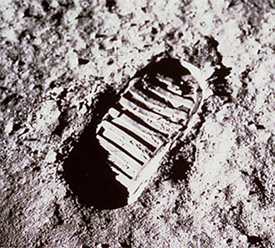


The important achievement of Apollo was demonstrating that humanity is not forever chained to this planet and our visions go rather further than that and our opportunities are unlimited.


Well, I think we tried very hard not to be overconfident, because when you get overconfident, that's when something snaps up and bites you.


Here men from the planet Earth first set foot upon the Moon. July 1969 AD. We came in peace for all mankind.


Sunday, July 15, 2012

Remembering Violet


This weekend has been an emotional one for me. It marks the two year anniversary of the death of my close friend Violet, which felt as painful as last year. I spoke briefly about Violet and my reaction to her death earlier in the year in TheProblems We Can't Fix.

However despite talking about the passing of world luminaries like Steve Jobs or Dennis Ritchie, I've never really spoken about Violet despite her huge personal influence on me (partly as her death came 6 months before I started this blog).

So to mark her extraordinary life, I'd like to share with you who she was and how she continues to challenge and influence me …


Violet was many things – when she died at 35 she had in some ways lived out more than many of us.  She was primarily an artist, this was her passion. But she was a knowledgeable genius in many fields – psychology, photography, politics, ethics, obscure science fiction and engineering. Like my own family, she'd grown up in an engineering family, and she was passionate at tinkering and understanding technology – despite having worked in computers for over 10 years I was always asking her “how to” do things.

But her true legacy is the relationships she nurtured. She was a big believer and champion of people above all.

She was an easy person for others to dismiss – she was transexual, she had a number of mental problems suffering from crippling levels of manic depression (bipolar) and well as suffering from acute levels of anxiety. She'd even been committed over her mental health issues for periods of time.

And yet she used her own demons to battle the demons of others. She understood the mental health system, symptoms of certain conditions and medication as only an experienced end-user. There are countless stories of the people who she helped get diagnosed and find real help to deal with their issues. When she died in 2010, the phrase most on peoples lips was “you understood me when no-one else did, you championed me when others judged, you saved my life”. I too consider myself within that number of people who faced my inner demons with her, and came out stronger. This is why I consider her a friend and a mentor.

That ethos of “we're stronger together” ran through her whole life. She was a big believer in co-operation and trying to get to a better place as a community.

She loved OpenSource, and was always experimenting with Linux, especially Ubuntu. She believed the internet had great potential to aiding all to access information fairly, and be able to be informed and a global community. She feared technology and the internet becoming a divisive line in the world, where only the “haves” who could afford Microsoft or Apple devices would benefit. As such she often helped people to build their own Linux machines often from spare/junk parts.

She was a committed vegetarian and passionate peace and political activitist. She wanted a fairer world where the line between the privileged and the non-privileged would not become the line between life and death or opportunity and enslavement.

Meanwhile, I was someone who I worked previously for nuclear energy (at University) and on countless military applications. I never thought we'd be able to be friends. But she only ever saw the good and the potential in me – encouraging me in my work, and in my writing. We actually became the best of friends, and it's the reason my book The Software Minefield is dedicated to her.

At work I'm always striving to build a team around me who are committed to each other on a work level and a personal level, and seek wherever possible to work for companies with a strong ethics and behaviour, who will seek to say no when a situation is wrong. All these things are the legacy of her mentorship and example. I know in my heart she would have excelled in an Agile environment.

And yet amongst all the serious stuff, she had a wicked sense of humour. One of the things which makes her memory so bittersweet is it's hard to think about her too much without wanting to laugh remembering some quip of hers. She had a true talent for saying the right (humorous) thing to turn around my most monstrous of problems. She kept me sane like that.

I must be honest. My first reaction to this strange transsexual with so mental challenges was of being unnerved. Not an easy thing for me to say, but I say it because if I had chosen to judge and follow that prejudice, I would have missed out on one of the most positive and influential friendships of my life.


Saturday, October 15, 2011

Dennis Ritchie dies


Last week Steve Jobs died, and consumers and world leaders stopped to pay tribute.

This week Dennis Ritchie died … and many outside the world of computing will go “who?”.

He was a computer scientist, who not only created the C programming language, but also helped to create the UNIX operating system in the 60s and 70s.

If like me you have ever done programming, you've no doubt done it in C – it's a hugely popular language, and incredibly powerful and flexible one. It's spawned and influenced many of our current languages like C++, C#, Perl and Java. If you've programmed in C, then you've owned C The Programming Language by Kernighan and Ritchie.


The same can be said for the impact of UNIX, itself written in C.

The technologies have made pretty much every type of device and gadget you can imagine today possible, it's used to program mobile phones to XBoxes. You cannot imagine the world of software today without them.

Quite rightly it's been said that the world of computing has lost a titan.


Friday, October 7, 2011

Testing's Men in Black


At a time when the world is watching the Rugby World Cup in awe of a certain set of men in black, it's interesting to see how this story has been doing the rounds on the internet – thank's to the Testing Club's Rob Lambert

http://www.t3.org/tangledwebs/07/tw0706.html

It's a no doubt apocryphal urban legend about IBM - but a lot of fun to read anyway!  In the 1960s the world of computing had a different emphasis – programming was a much slower business, and there was one shot at delivering software, no patching, it had to be right on release.

IBM supposedly found that programmers who wrote the code were blind to any faults in their software when it came to testing.  Some people though showed a natural aptitude, and thus one of the world's first test teams - “the Black Team” - came into being.

The Black Team were made up of the best-of-the-best when it came to breaking software.  They became a kind of bogey-man to terrify young developers, able to break any software they came across.  This tale here is just a brilliant parable of the supposed lengths they'd go to in order to test software ...

http://www.penzba.co.uk/GreybeardStories/TheBlackTeam.html

Tales of the Black Team go further, telling how team members started to form an identity together, wearing all-black to the white collar IBM offices.  Some even growing Dali-esque moustaches they would twirl sinisterly as they tested.


I'm very dubious – but I absolutely love how software testing, which feels sometimes like a very recent discipline (in New Zealand sometimes it feels not quite respected as a profession at all some days), has managed to pick up this urban legend.

But it also takes me back to one of my first posts here, on “what is software testing”.  The tale of the Black Team is all about a team who go out of their way to break things.  The story where they work out the resonant frequency of a large tape reader so it rocks itself over whilst reading a file is bang-on-the-money for a lot of people who see testers as people who just go out of their way to destroy.


Today in a management meeting it came out that the business owners see testing as a problem.  “The project was all going well until testing got involved”.  As if testers are responsible for the defects they encountered.  I think the reality is much closer to “we managed to delude ourselves that everything was fine until testing gave us a wake up call”.  If testing is done well there's no hiding the truth of where a project lies.

But no- testing is not about breaking things.  It's about proving quality.  And that can be a bogey man of it's own to a complacent project.

Thursday, October 6, 2011

Steve Jobs - a legacy of quality ...


Steve Jobs has died today at the age of 56 …

He leaves behind him a successful legacy, with Apple computers now the most lucritive IT company in the world, having ridden out the financial recession where other companies have stumbled.

But is the financial ledger at Apple his only legacy?

I first heard about Apple with a passion back in 2003.  Lots of people in my C&C project were getting Macs.  It was explained to me by one of our developers “you know how on Windows, you try and install software, need to put an update on, has to reboot, won't work, then the update fails and trashes your installation?  On a Mac it just works”.

That seems to be part of the Steve Jobs alchemy – in a world where we're used to software not working first time, where we know we're going to get some quirks until there are a few updates, Apple seemed capable of making products that seemed virtually faultless.  In fact, it would become big news if any issues were found.

Here are what I think are several traits which have made Apple unique,

  • They don't work to release deadlines.  They release a product when they're satisfied with it.  Only this week we had complaints that the iPhone 4 was 18 months old, and wasn't it time for a new one to be released?  Apple work to their own timetimes, releasing products when they're ready.
  • Diversity.  Or maybe lack of it.  Nokia makes many brands of phone, a new one each month.  Apple only make one phone – the one you want.
  • Simplicity.  Apple products are designed to be accessable by everyone.  Hence the uptake of their products includes people outside the normal “gadget freak” band.  So called “silver surfers” (older computer users) find Apple intuitive where Windows leaves them baffled.
  • Quality.  As my developer so rightly put it, Apple products “just seem to work”  [It looks easy, but incredibly difficult to achieve]


It's ironic but many companies are obviously trying to chip away at Apple's lead.  They are envious of it's strong position, and hungry to take some of the market, so

  • They rush out a product to be first to market.
  • They cram their product with as many features as possible, hoping to beat Apple on specification.

But it never works out for them, because in their gold rush to feature add, their product suffers in the quality realm, and word gets out it's a stinker.

We all want a piece of the Apple pie.  I sit now on meetings which talk endlessly about the important of “customer experience”, the Steve Jobs buzz-word.  But when marketing types are talking up the planned “customer experience” they're not trying hard enough to bake quality into their products.  That's not taking on Apple, that's setting yourself up to lose your customers to Apple.

Today Steve Jobs was described as a contemporary Leonardo da Vinci.  I don't think that's right – as his genius wasn't so much in technology as in business.  I described him at work at a modern Henry Ford of computing – who also made products only in black.


But tonight, I think weighing things up, he was perhaps a William Denning of the modern computer age, a champion of quality, although of course, quality with a price tag.